Purpose of Flushing Schemes for Mechanical Seals

Generally speaking, mechanical seals (especially cartridge mechanical seals) can be equipped with auxiliary systems. However, the most suitable flushing scheme should be selected based on the specific operating conditions.

Flushing, in simple terms, refers to the direct injection of liquid into the high-pressure side of a double mechanical seal or the seal chamber of a single mechanical seal. Most pumps should be flushed, and this is especially critical for light hydrocarbon pumps.

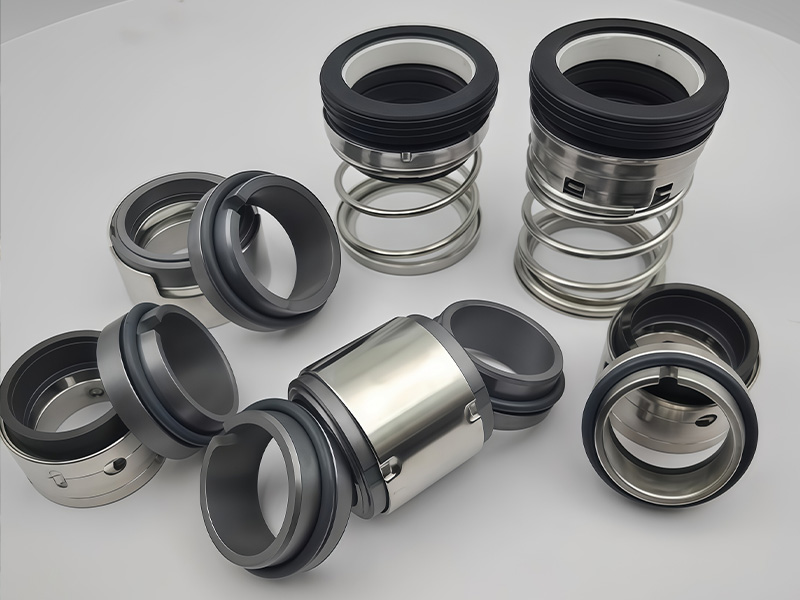
The main purposes of configuring a flushing scheme for mechanical seals are as follows:

  1. Flushing for heat dissipation It is essential to control the heat generated by the liquid film at the seal faces. This is achieved by flushing the seal chamber with liquid to carry away heat and limit temperature rise.
  2. Reducing liquid temperature In some cases, excessively high liquid temperature can impair seal performance. In such situations, the temperature must be lowered to improve the fluid’s properties and sealing reliability.
  3. Adjusting seal chamber pressure In certain applications, it is necessary to increase or decrease the seal chamber pressure to enhance performance. This can help suppress vaporization or reduce the thermal load on the seal components.
  4. Cleaning the process fluid When the process fluid contains unsuitable solid particles or contaminants, cleaning the liquid inside the seal chamber becomes necessary. In extreme cases, clean external liquid may need to be supplied to the seal system.
  5. Controlling the atmospheric side of the seal When process fluids come into contact with the atmosphere, they may dry out, crystallize, or coke. Preventing such interaction with the atmosphere is very important to avoid adverse effects on seal performance.

Therefore, to achieve better performance and longer service life from your mechanical seal, it is strongly recommended to equip it with an appropriate flushing scheme.