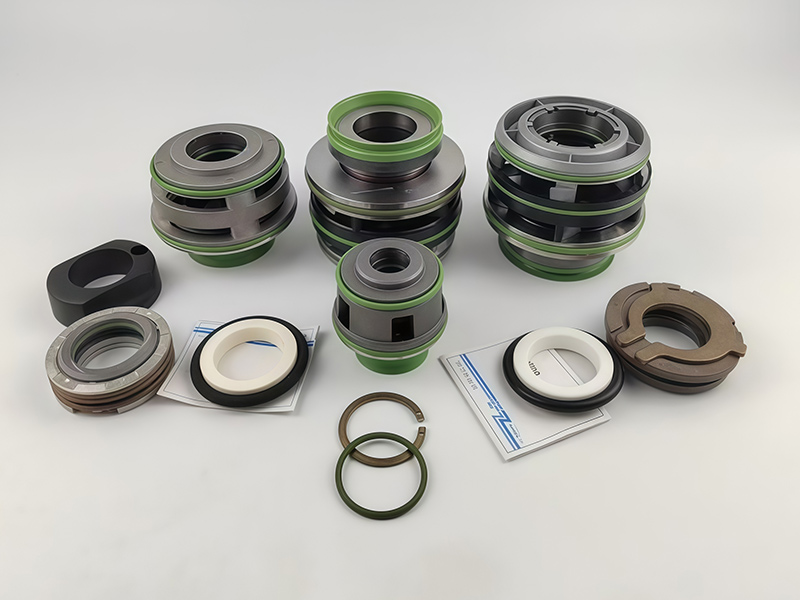
Material Selection for Mechanical Seals

I. Commonly Used Materials for Mechanical Seals

  1. Clean water, room temperature Rotating ring (dynamic face): 9Cr18, 1Cr13 with cobalt-chromium-tungsten hardfacing, cast iron Stationary ring (static face): Resin-impregnated graphite, bronze, phenolic plastic
  2. River water (with silt/sand), room temperature Rotating ring: Tungsten carbide Stationary ring: Tungsten carbide
  3. Seawater, room temperature Rotating ring: Tungsten carbide, 1Cr13 with cobalt-chromium-tungsten hardfacing, cast iron Stationary ring: Resin-impregnated graphite, tungsten carbide, cermet (metal ceramic)
  4. Hot water above 100°C Rotating ring: Tungsten carbide, 1Cr13 with cobalt-chromium-tungsten hardfacing, cast iron Stationary ring: Resin-impregnated graphite, tungsten carbide, cermet
  5. Gasoline, lubricating oil, liquid hydrocarbons, room temperature Rotating ring: Tungsten carbide, 1Cr13 with cobalt-chromium-tungsten hardfacing, cast iron Stationary ring: Resin-impregnated or tin-antimony alloy graphite, phenolic plastic
  6. Gasoline, lubricating oil, liquid hydrocarbons, 100°C Rotating ring: Tungsten carbide, 1Cr13 with cobalt-chromium-tungsten hardfacing Stationary ring: Bronze-impregnated or resin-impregnated graphite
  7. Gasoline, lubricating oil, liquid hydrocarbons, containing particles Rotating ring: Tungsten carbide Stationary ring: Tungsten carbide

II. Uses and Types of Sealing Materials

Due to differences in the sealed medium and equipment operating conditions, sealing materials must possess different adaptability properties to meet the functional requirements of the seal. General requirements for sealing materials include:

  1. Good density, minimal leakage of the medium.
  2. Appropriate mechanical strength and hardness.
  3. Good compressibility and resilience, with minimal permanent deformation.
  4. No softening or decomposition at high temperatures; no hardening or brittleness at low temperatures.
  5. Excellent corrosion resistance, capable of long-term service in acids, alkalis, oils, etc., with minimal changes in volume and hardness, and no adhesion to metal surfaces.
  6. Low friction coefficient and good wear resistance.
  7. Sufficient softness for good conformity with the sealing surface.
  8. Good aging resistance and long service life.
  9. Easy to process and manufacture, low cost, and readily available.

In addition to rubber, which is the most commonly used sealing material, other suitable materials include graphite, polytetrafluoroethylene (PTFE), and various sealants.

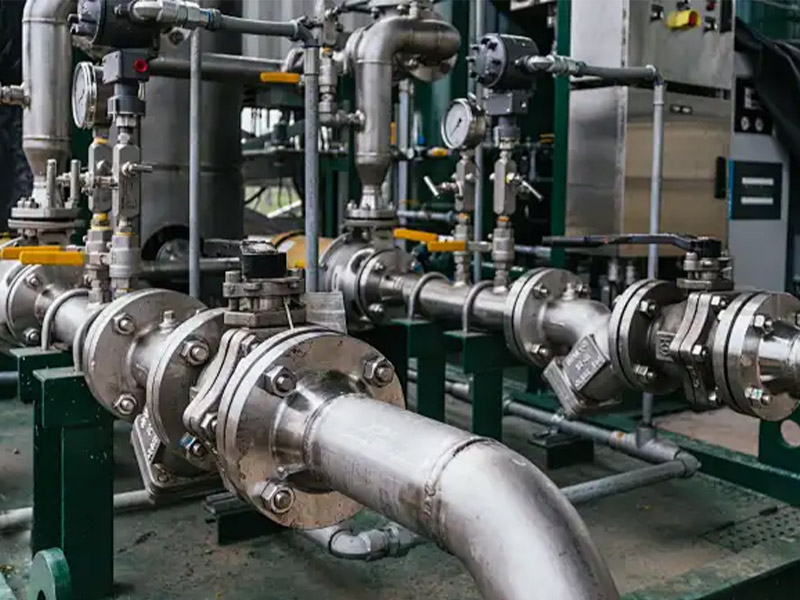
III. Installation and Technical Measures for Mechanical Seals

  1. The radial runout of the equipment shaft should be ≤0.04 mm, and axial movement should not exceed 0.1 mm.
  2. The sealing area of the equipment must be kept clean during installation; all seal components should be cleaned, and the sealing faces must be intact to prevent impurities or dust from entering the seal.
  3. During installation, avoid any impact or knocking to prevent damage to the friction pairs, which could cause seal failure.
  4. Apply a thin layer of clean mechanical oil to all surfaces in contact with the seal to facilitate smooth installation.
  5. When tightening the stationary ring gland bolts, apply even force to ensure the stationary ring face remains perpendicular to the shaft centerline.
  6. After installation, the rotating ring should move flexibly along the shaft by hand and exhibit some elasticity.
  7. After installation, manually rotate the shaft; it should turn smoothly without any noticeable variation in resistance.
  8. Before starting the equipment, ensure it is fully filled with the medium to prevent dry running, which can cause seal failure.
  9. For media that are prone to crystallization or contain particles, or when the medium temperature exceeds 80°C, appropriate flushing, filtration, and cooling measures should be implemented. Refer to relevant mechanical seal standards for auxiliary systems.
  10. Apply clean mechanical oil to contact surfaces during installation. Pay special attention to selecting the appropriate oil for different auxiliary seal materials (e.g., O-rings) to avoid swelling, accelerated aging, or premature seal failure due to oil incompatibility.